A heavy-duty dog harness isn’t just an accessory. It is a safety tool. Large breeds like Labradors, German Shepherds, and Pitbulls generate immense kinetic pulling force. Attaching a leash directly to a neck collar can cause tracheal collapse, whereas cheap harnesses often tear at the seams or cause severe armpit chafing.
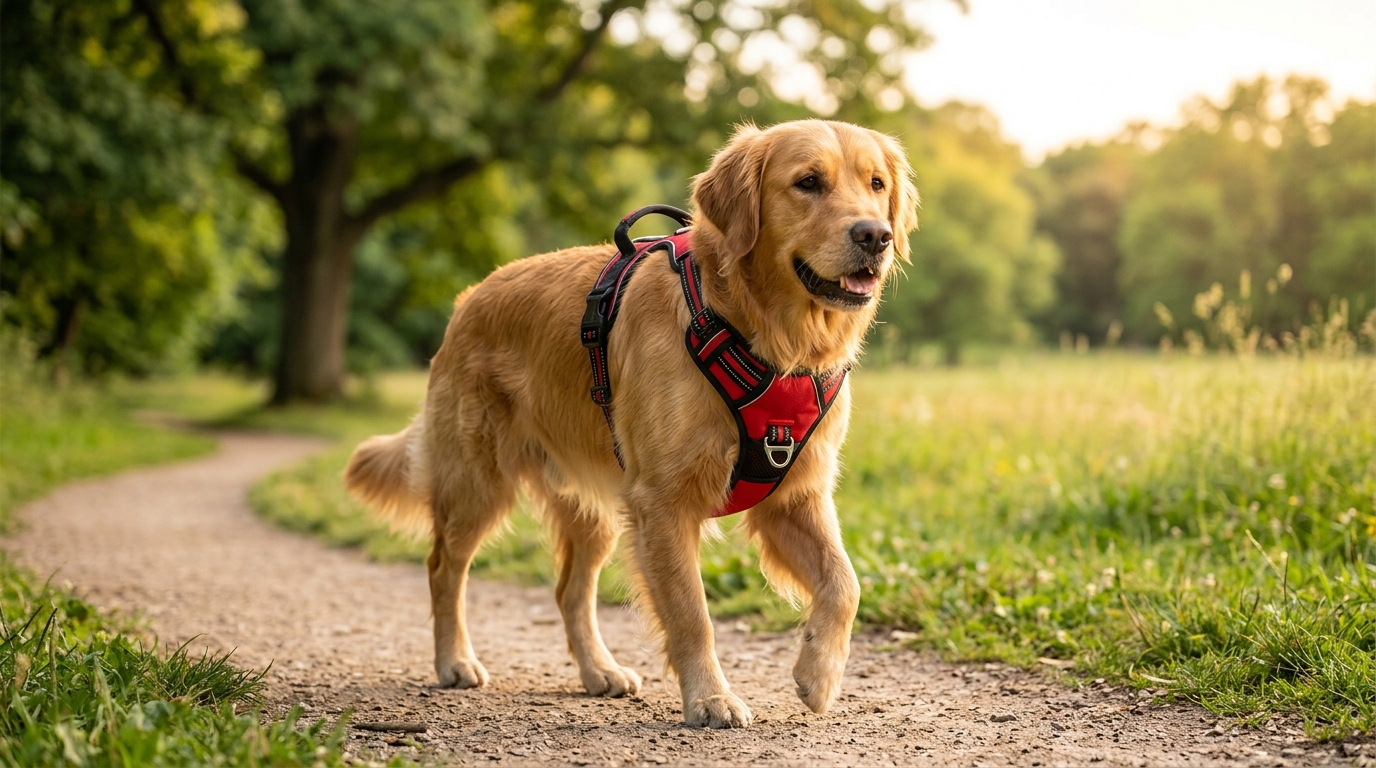
After evaluating stress points, buckle load capacities, and ergonomic chest geometry, we evaluated top-performing large dog harnesses to help you choose the safest option for your dog.
Quick Comparison: Top Harnesses for Big Breeds
| Product | Best For | Key Feature | Hardware Type | Pull Control |
| Ruffwear Front Range | Daily Walking | 4-point adjustment, foam-padded chest | Reinforced Aluminum | Dual-Clip (Front/Back) |
| Rabbitgoo No-Pull Harness | Best Overall Budget | Breathable air mesh, high visibility trim | Heavy-Duty POM Plastic | Dual-Clip Front Steering |
| IceFang Tactical K9 | Heavy Pullers & Hiking | MOLLE system, top control traffic handle | Metal Load-Tested Buckles | Back & Front Leash Rings |
| Kurgo Tru-Fit Smart Harness | Car Safety & Travel | Crash-tested up to 75 lbs, steel nesting buckles | All-Steel Metal Hardware | Front-Clip Steering |
Key Features Every Large Dog Harness Must Have
Standard dog harnesses fail on large dogs for three distinct reasons: poor strap geometry, plastic hardware failure under pressure, and restricted shoulder movement. Look for these non-negotiable features:
- Y-Shaped Chest Geometry: A broad Y-plate sits on the sternum without choking the throat or blocking natural shoulder extension. Avoid horizontal T-bar chest straps, which bind the shoulders.
- At Least 4 Independent Adjustment Points: Deep-chested breeds (like Boxers or Dobermans) require precise girth adjustment separate from neck width to prevent harness rotation.
- Reinforced Front-Clip D-Ring: Attaching the leash to the chest ring naturally redirects your dog’s momentum back toward you when they pull.
- Padded Top Control Handle: Essential for keeping large breeds secure near busy traffic or during sudden reactions.
Top 3 Large Dog Harness Recommendations
1. Ruffwear Front Range – Best Daily Harness for Active Dogs
- Weight Capacity: Up to 130+ lbs
- Pros: Highly durable nylon webbing, foam-padded chest and belly straps prevent friction.
- Cons: Top loop is fabric-reinforced webbing rather than solid metal.
- Why it Wins: The gold standard for daily walks. The ergonomic chest plate distributes pulling tension across the chest without causing armpit chafing.
2. Rabbitgoo No-Pull Harness – Best Value for Hard Pullers
- Weight Capacity: Up to 110 lbs
- Pros: Fast-on double-snap buckles, 3M reflective threading for night safety, very affordable.
- Cons: Strap adjustment slides can loosen slightly over time on extreme pullers.
- Why it Wins: Uses an effective front-steering D-ring that discourages pulling without causing pain.
3. IceFang Tactical K9 Harness – Best Heavy-Duty Harness for Strength & Control
- Weight Capacity: Tested to 1000+ lbs proof-load per metal buckle
- Pros: 1050D military-grade nylon, custom tactical patch area, dual alloy leash attachment points.
- Cons: Heavier than standard mesh harnesses; can trap heat on hot summer days.
- Why it Wins: Ideal for large working breeds (German Shepherds, Rottweilers, Malinois) that require absolute hardware reliability.
How to Measure a Large Dog for a Harness
Never buy a harness based solely on your dog’s weight. A 70 lb Pitbull and a 70 lb Afghan Hound have drastically different torso proportions.
- Chest Girth (Most Critical): Wrap a soft tape measure around the widest part of your dog’s ribcage, roughly 2 inches behind their front armpits.
- Lower Neck Girth: Measure the thick base of the neck where the harness chest plate will sit, not high near the collar.
- The Two-Finger Rule: Once tightened, you should easily slip two fingers between any strap and your dog’s skin. If you can’t, it’s too tight; if three fingers fit, it may shift and chafe.
Frequently Asked Questions
Q: Are front-clip harnesses safe for large dogs that pull?
Yes. Front-clip harnesses shift leverage from the dog to the handler. When a large dog pulls, the front attachment turns their torso sideways toward you, stopping forward momentum naturally.
Q: Can a large dog wear a harness all day?
No. Leaving a harness on continuously can trap moisture, mat fur, and cause skin sores from friction. Always remove harnesses indoors or when unsupervised.
Watch Top 6 Best Dog Harnesses for Large Dogs in 2026 for a visual breakdown of how top-rated no-pull and tactical harnesses fit and perform on big breeds.