If you share your home with a Pomeranian, Bichon Frise, Shih Tzu, Maltese, or any other small fluffy breed, you already know their coat needs more than an occasional brush-through. Small fluffy dog care tips that work for short-haired breeds often fall short here, because a dense, cottony, or silky coat mats quickly, traps dirt close to sensitive skin, and requires a different bathing and brushing rhythm than most owners expect. This guide breaks down exactly what these dogs need — from brushing technique and bath frequency to nail care, diet, and exercise — so you can build a routine that actually fits your week.
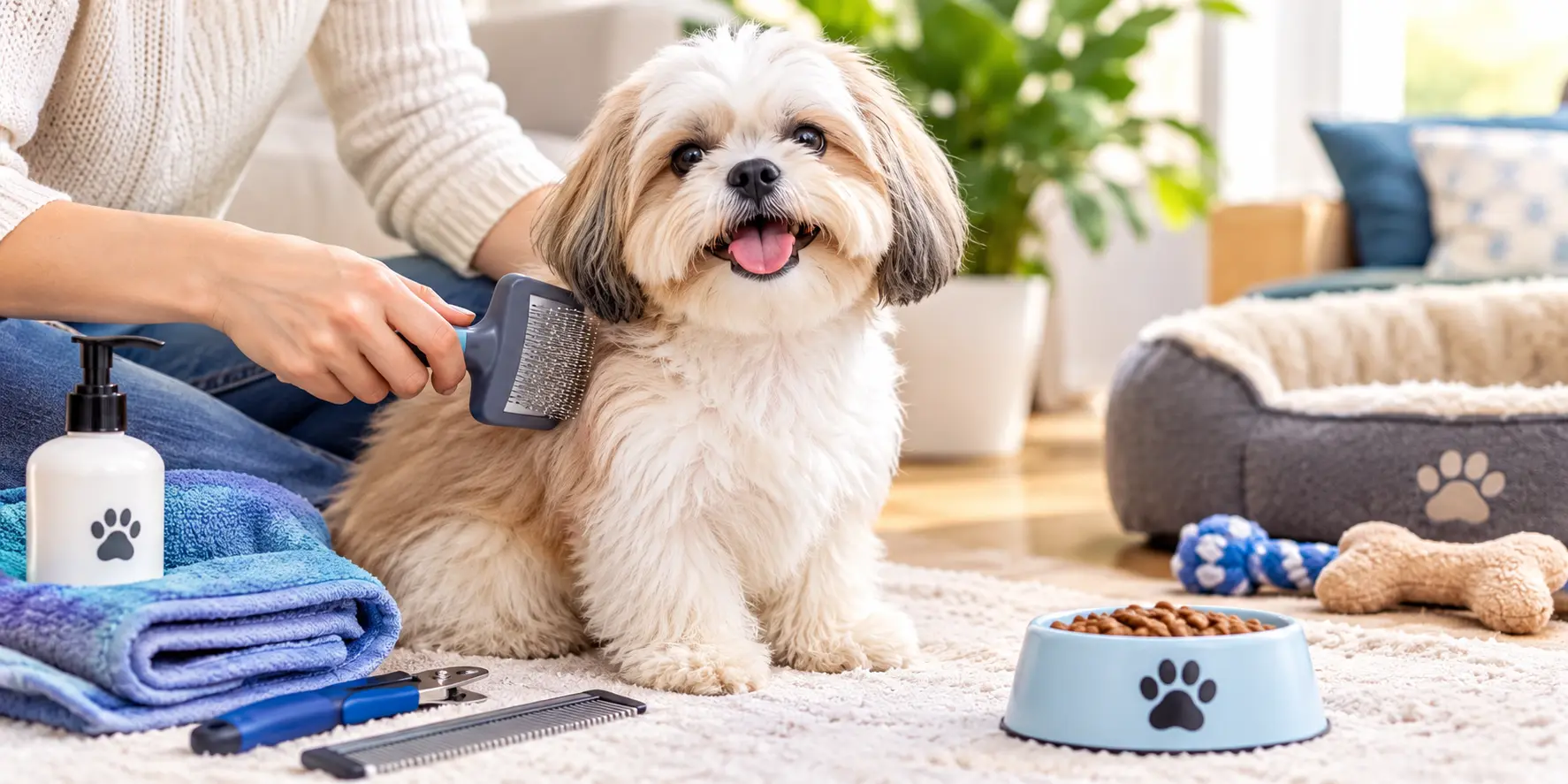
You’ll find a full breakdown of grooming tools, a simple daily-weekly-monthly schedule, the most common mistakes owners make with fluffy coats, and clear signs that mean it’s time to call a veterinarian rather than reach for a brush. Whether your dog is a new puppy or a longtime companion, these tips are meant to be practical enough to start using today.
What Makes Small Fluffy Dogs Different to Care For?
Small fluffy breeds combine two traits that each add complexity on their own: a small body frame and a dense or long coat. Breeds like the Pomeranian, Shih Tzu, Maltese, Bichon Frise, Havanese, and Yorkshire Terrier were often bred for companionship rather than working roles, and many carry a double coat or a continuously growing single coat that behaves more like human hair than typical dog fur.
That coat type changes the care equation in a few specific ways:
- Mats form fast. Loose undercoat gets trapped in the topcoat, especially behind the ears, under the legs, and around the collar area.
- Skin issues hide easily. A thick coat can mask hot spots, redness, or parasites until they’ve already become uncomfortable for the dog.
- Bathing needs are different. Fluffy coats often need conditioning and thorough drying to prevent matting after a bath, unlike short coats that air-dry quickly.
- Small bodies lose heat faster. Compact breeds are more sensitive to cold and heat extremes, which affects both grooming schedules and exercise planning.
- Dental crowding is common. Many small breeds have proportionally larger teeth for their jaw size, making dental care a bigger priority than owners often expect.
Understanding these differences is the foundation for every tip below.
15 Essential Small Fluffy Dog Care Tips
1. Brush Your Dog Regularly
How often should you brush a small fluffy dog? Most small fluffy breeds need brushing every one to two days, and daily brushing is best for long-coated dogs like Shih Tzus and Maltese. Short bursts of consistent brushing prevent the deep mats that require a groomer or clippers to remove.
Brush in the direction of hair growth first, then go against it in thin sections to catch loose undercoat closer to the skin. Focus on high-friction zones: behind the ears, the armpits, the belly, and the area under the tail. A quick daily pass, even just five minutes, is far easier on both of you than a once-a-week deep detangling session.
2. Prevent Mats and Tangles
How do you prevent mats and tangles? The most reliable way to prevent mats is frequent brushing all the way down to the skin, not just across the surface of the coat. Surface brushing can leave a coat looking smooth while mats form underneath, so always check by parting the fur and looking at the base.
Other mat-prevention habits worth building in:
- Comb through after every bath, once the coat is fully dry
- Use a leave-in conditioning spray to reduce static and friction
- Keep problem areas (collar line, behind ears, under legs) trimmed short if mats form there repeatedly
- Address a mat as soon as you feel it — small mats are quick to work out; large ones often need to be shaved
Never try to cut a mat out with scissors close to the skin. Dogs have surprisingly thin, loose skin, and mats often sit closer to the body than they appear, which makes accidental cuts a real risk.
3. Use the Right Grooming Tools
What type of brush is best for fluffy dogs? A slicker brush is generally the best all-purpose tool for fluffy coats, paired with a metal comb to check for hidden mats near the skin. A slicker brush’s fine, slightly bent wires are designed to lift loose undercoat without tugging on healthy hair.
A practical small-dog grooming kit typically includes:
| Tool | Purpose |
|---|---|
| Slicker brush | Daily detangling and undercoat removal |
| Metal comb (fine + wide teeth) | Checking for mats close to the skin |
| Dematting tool or comb | Working out small, developing mats |
| Nail clippers or grinder | Routine nail maintenance |
| Blunt-tip scissors | Trimming paw fur and sanitary areas |
| Dog-specific shampoo and conditioner | Bathing and coat conditioning |
Human hairbrushes and combs aren’t a substitute — dog coats have a different texture and density, and the wrong tool can break hair or irritate skin.
4. Bathe Your Dog Properly
How often should a fluffy dog be bathed? Most small fluffy dogs do well with a bath every two to four weeks, though this varies based on coat type, activity level, and any skin conditions a veterinarian is monitoring. Bathing too frequently can strip natural oils and dry out the skin, while waiting too long allows dirt and oil buildup that contributes to matting.
For a bath that supports coat health:
- Brush out the coat completely before wetting it — water tightens existing mats
- Use lukewarm water and a shampoo formulated for dogs
- Apply conditioner to reduce tangling, especially on longer coats
- Rinse thoroughly, since leftover product residue can irritate skin
- Dry completely with a towel and a dog-safe dryer on a low, cool setting, brushing as you go
Skipping the full dry-and-brush step is one of the most common causes of post-bath matting.
5. Keep the Face and Eye Area Clean
Fluffy breeds with facial hair are prone to tear staining and debris buildup around the eyes and mouth. Wipe the face daily with a damp cloth or a vet-approved eye-area cleanser, and keep the hair around the eyes trimmed short so it doesn’t scratch the cornea or trap moisture. Persistent staining, discharge, or squinting is worth mentioning to a veterinarian, since it can sometimes point to a tear-duct or eye health issue rather than a purely cosmetic one.
6. Maintain Healthy Ears
How should you clean a small dog’s ears? Clean a small dog’s ears roughly every one to two weeks using a vet-approved ear cleaner and a cotton ball, wiping only the visible parts of the ear rather than inserting anything into the ear canal. Breeds with floppy or heavily furred ears are especially prone to trapped moisture and wax buildup, which creates conditions for infection.
Watch for signs of an ear problem between cleanings, including:
- Strong odor
- Redness or swelling
- Excessive scratching at the ears
- Head shaking or tilting
- Dark or unusual discharge
Any of these signs warrant a veterinary visit rather than at-home treatment, since ear infections often need prescription medication to fully clear.
7. Trim the Nails Regularly
How often should you trim a small dog’s nails? Most small dogs need a nail trim every three to four weeks, though active dogs that walk on pavement may wear nails down naturally and need less frequent trims. Overgrown nails can alter a dog’s gait and make walking uncomfortable over time.
A simple way to judge timing: if you can hear nails clicking on hard flooring, they’re due for a trim. Trim a small amount at a time, especially on dogs with dark nails where the quick isn’t visible, and keep styptic powder on hand in case of an accidental nick.
8. Take Care of the Paws
How do you care for fluffy dog paws? Paw care for fluffy breeds mainly involves trimming the fur between the pads and checking for debris, since overgrown paw hair collects ice, dirt, and moisture that can cause slipping or irritation. Trim the fur flush with the pad, not shorter, to preserve natural traction and cushioning.
Seasonal paw care matters too:
- In winter, check paws for ice balls between the pads and consider dog booties or paw wax on salted sidewalks
- In summer, test pavement temperature with your hand before walks to avoid burns
- Year-round, inspect pads for cracks, cuts, or foreign objects after outdoor time
9. Follow a Balanced Diet
What should small fluffy dogs eat? Small fluffy dogs generally do best on a complete and balanced commercial dog food formulated for small breeds, portioned according to their age, weight, and activity level. Small-breed formulas typically have smaller kibble size and a calorie density suited to faster metabolisms and smaller stomachs.
A few nutrition basics worth keeping in mind:
- Follow feeding guidelines on the food packaging as a starting point, then adjust based on body condition
- Avoid frequent table scraps, which can quickly add excess calories for a small body
- Provide fresh water at all times
- Ask a veterinarian about the right food and portions if your dog has allergies, weight concerns, or a medical condition
Because small breeds are more sensitive to weight gain, even modest overfeeding can noticeably affect joint health and energy levels over time.
10. Provide Daily Exercise
How much exercise does a small fluffy dog need? Most small fluffy dogs need about 30 to 60 minutes of physical activity per day, though this varies by breed energy level and age. This can be split into a couple of walks plus indoor or yard play, since many small breeds get meaningful exercise from fetch, tug, or supervised play with other dogs.
Exercise needs shift with life stage — puppies often benefit from shorter, more frequent play sessions rather than long walks, while senior dogs may need gentler, shorter outings. Mental stimulation matters too: puzzle toys, short training sessions, and sniff-focused walks all help meet a small dog’s activity needs without overexerting a small frame.
11. Support Dental Health
How do you care for a small dog’s teeth? Daily or near-daily brushing with a dog-specific toothpaste is the most effective way to support dental health in small breeds, which are prone to tartar buildup and dental crowding. Never use human toothpaste, since ingredients like xylitol are toxic to dogs.
If daily brushing isn’t realistic, aim for at least a few times a week, and supplement with:
- Dental chews approved by veterinary dental organizations
- Water additives designed to reduce plaque
- Regular veterinary dental checkups, since small breeds often need professional cleanings more frequently than larger dogs
Bad breath, visible tartar, or reluctance to chew can all signal a dental issue worth having checked.
12. Manage Shedding
How can owners reduce shedding? Regular brushing is the most effective way to reduce shedding, since it removes loose undercoat before it ends up on furniture and clothing. Double-coated fluffy breeds typically have heavier seasonal shedding periods in spring and fall, when more frequent brushing — sometimes daily — helps manage the volume.
A high-quality diet also supports coat health from the inside, since dull, brittle fur can sometimes reflect a nutritional gap. If shedding suddenly increases outside of a normal seasonal pattern, or comes with bald patches or skin irritation, it’s worth a veterinary visit rather than assuming it’s typical coat blow.
13. Schedule Professional Grooming
Do small fluffy dogs need professional grooming? Most small fluffy breeds benefit from professional grooming every four to six weeks, even with a consistent at-home routine, since groomers can safely handle trims, sanitary clips, and any mats that have become difficult to manage at home. Professional groomers also have the training and tools to trim close to sensitive areas like the face, ears, and paws safely.
A groomer visit is also a good opportunity to have a trained eye check the skin and coat for anything you might miss during regular brushing, such as early skin irritation or parasites.
14. Watch for Skin and Coat Problems
A thick coat can hide problems that would be obvious on a short-haired dog, so it’s worth doing a hands-on check during every brushing session. Part the fur in several spots and look for redness, flaking, bumps, or hair loss, and run your hands along the body to feel for anything unusual.
Common signs worth monitoring include:
- Persistent scratching or licking at one area
- Redness, scabs, or a rash
- A dull, brittle, or greasy-looking coat
- Small black specks in the fur (a possible sign of fleas)
- Areas of thinning or bald patches
These signs don’t always mean something serious, but they’re worth tracking and mentioning at the next veterinary visit, especially if they persist for more than a few days.
15. Build a Consistent Daily Care Routine
The single biggest factor in keeping a small fluffy dog’s coat and health in good shape isn’t any one tip — it’s consistency. A short daily routine of brushing, a quick face and ear check, and a general once-over prevents small issues from becoming bigger ones, and it keeps grooming sessions calm and manageable rather than a wrestling match with mats.
Best Grooming Routine for a Small Fluffy Dog
A simple, repeatable schedule takes the guesswork out of coat care. This is a general starting point — your veterinarian or groomer can help fine-tune it for your dog’s specific coat and health needs.
| Frequency | Task |
|---|---|
| Daily | Brush coat, wipe face and eye area, quick skin/coat check |
| 2–3 times per week | Toothbrushing (daily is ideal) |
| Weekly | Comb through problem areas (behind ears, legs, collar line) |
| Every 1–2 weeks | Clean ears, check and trim paw fur |
| Every 3–4 weeks | Trim nails, full bath with conditioner |
| Every 4–6 weeks | Professional grooming appointment |
| Ongoing | Monitor for shedding changes, skin issues, or behavior changes |
Common Small Fluffy Dog Grooming Mistakes to Avoid
What grooming mistakes should owners avoid? The most common mistakes are brushing only the surface of the coat, bathing before fully brushing out mats, and waiting too long between grooming sessions until mats become severe.
Other frequent mistakes include:
- Using human hair products, which aren’t formulated for a dog’s skin pH
- Cutting mats out with scissors near the skin instead of using a dematting tool or seeking professional help
- Skipping the full dry-and-brush step after a bath, which allows damp fur to mat
- Trimming nails too short without a clear view of the quick
- Ignoring small behavioral changes, like reluctance to be touched in a certain area, that could indicate discomfort
- Assuming a thick coat means skin problems will be visible early — they often aren’t
Avoiding these mistakes is often more impactful than any single grooming tool or technique.
When Should You Take Your Dog to a Veterinarian?
What signs indicate that a dog needs veterinary attention? Persistent scratching, unusual odor, visible skin redness or sores, sudden hair loss, changes in appetite or energy, or any sign of pain during grooming are all reasons to schedule a veterinary visit rather than continue with at-home care alone.
Routine grooming can help you notice these changes early, but grooming advice is not a substitute for veterinary diagnosis or treatment. If you notice anything that seems out of the ordinary for your dog, or if a mild issue doesn’t improve within a few days, it’s best to have a veterinarian evaluate it directly.
Frequently Asked Questions
How often should I brush my small fluffy dog?
Most small fluffy dogs need brushing every one to two days, with daily brushing recommended for long-coated breeds. Consistency matters more than intensity — a short daily session prevents the deep mats that require professional removal.
How do I stop my fluffy dog’s fur from matting?
Prevent matting with frequent brushing down to the skin, thorough drying and combing after baths, and prompt attention to any tangle as soon as you notice it. High-friction areas like behind the ears and under the legs need extra attention.
How often should a small fluffy dog be bathed?
Every two to four weeks is typical for most small fluffy breeds, though the right frequency depends on coat type, activity level, and skin condition. Over-bathing can dry out the skin, while under-bathing allows buildup that contributes to matting.
What brush is best for a small fluffy dog?
A slicker brush paired with a fine-tooth metal comb generally works best for fluffy coats, since the slicker brush lifts loose undercoat and the comb checks for mats close to the skin.
Do small fluffy dogs need professional grooming?
Yes, most benefit from a professional grooming appointment every four to six weeks, even with a solid at-home routine, since groomers can safely manage trims and stubborn mats.
How can I reduce shedding in a fluffy dog?
Regular brushing is the most effective way to manage shedding, especially during seasonal coat-blow periods in spring and fall. A balanced diet also supports overall coat health.
How often should I trim my dog’s nails?
Roughly every three to four weeks for most small dogs, or whenever you notice nails clicking on hard floors. Active dogs that walk on pavement regularly may need trims slightly less often.
Is it safe to remove mats myself at home?
Small, early-stage mats can often be worked out gently with a dematting comb and some patience. Larger or tight mats close to the skin are safer left to a professional groomer to avoid accidental cuts.
How much exercise does a small fluffy dog need each day?
Most need about 30 to 60 minutes of activity daily, which can include walks, play sessions, and mental stimulation like puzzle toys. Exact needs vary by breed, age, and individual energy level.
What should I feed my small fluffy dog?
A complete and balanced commercial food formulated for small breeds, portioned according to your dog’s age, weight, and activity level, is generally recommended. A veterinarian can help tailor recommendations for dogs with specific health needs.
Final Thoughts
Caring for a small fluffy dog comes down to a handful of consistent habits: regular brushing, a sensible bathing schedule, attentive nail and ear care, a balanced diet, and enough daily activity to keep both body and mind engaged. None of these tasks need to be complicated once they become routine, and a little consistency goes a long way toward preventing the mats, skin issues, and discomfort that come from letting grooming slide.
If anything about your dog’s coat, skin, energy, or behavior seems off, a veterinarian is always the right resource for a real diagnosis. Everything above is meant to support a healthy daily routine — not replace professional veterinary care.
Pingback: NaturVet All-In-One Puppy Daily Care Soft Chews: Full Review