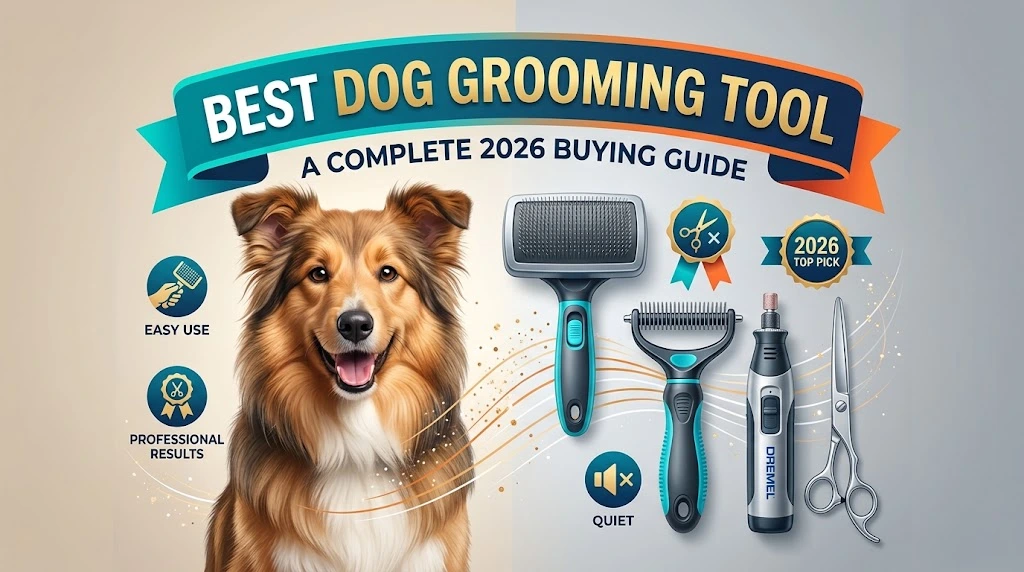
Choosing the best dog grooming tool isn’t a one-size-fits-all decision — the right pick depends heavily on your dog’s coat type, how much they shed, and what you’re trying to accomplish (routine brushing, deshedding, trimming, or full at-home grooming). This guide breaks down the top tool categories, which one fits which dog, and how to build a grooming kit that actually works.
Why the “Best” Tool Depends on Coat Type
Before buying anything, it helps to know your dog’s coat type, since that’s the single biggest factor in tool choice:
- Short, smooth coats (Labradors, Beagles) – need light deshedding and polishing tools
- Double coats (Huskies, Golden Retrievers, German Shepherds) – need deshedding tools that reach the dense undercoat
- Long or silky coats (Shih Tzus, Yorkies) – need detangling combs and slicker brushes
- Curly or wiry coats (Poodles, Terriers) – need slicker brushes and clippers for regular trims
With that framework in mind, here’s a breakdown of the best tools by category.
1. Deshedding Tools (Best for Double-Coated Breeds)
Deshedding tools are designed to reach past the topcoat and pull loose undercoat hair without damaging the skin. They’re the single most effective category for reducing shedding around the house.
- Removes loose undercoat hair that regular brushes miss
- Dramatically reduces hair on furniture and floors
- Best used 1–2 times per week, not daily (overuse can irritate skin)
Best for: Huskies, German Shepherds, Golden and Labrador Retrievers, and other heavy-shedding double-coated breeds.
2. Slicker Brushes (Best All-Around Tool)
A slicker brush — fine, short wires set close together on a flat head — is often considered the most versatile grooming tool you can own. It works on most coat types and is great for everyday detangling and light shedding control.
- Removes loose hair and mild tangles
- Gentle enough for daily use on most breeds
- Affordable and widely available
Best for: Poodles, Doodles, terriers, and general everyday brushing across coat types.
3. Undercoat Rakes
Similar in purpose to deshedding tools but with a different design — long, widely spaced teeth that penetrate deep into thick fur without cutting the topcoat.
- Excellent for very dense or matted undercoats
- Helps prevent matting in long-haired double-coated breeds
- Should be used gently to avoid skin irritation
Best for: Chow Chows, Newfoundlands, and other breeds with extremely thick undercoats.
4. Grooming Gloves
Grooming gloves have rubber nubs on the palm and fingers, letting you brush your dog while essentially petting them — ideal for anxious or grooming-averse dogs.
- Low-stress option for nervous or elderly dogs
- Doubles as a bathing tool
- Less effective on heavy mats or dense undercoats
Best for: Short-haired dogs, puppies being introduced to grooming, and anxious dogs.
5. Clippers and Trimmers
For dogs that need regular haircuts (rather than just brushing), a quality clipper set is essential. Look for adjustable blade guards and quiet motors, since noise sensitivity is common in dogs.
- Enables full at-home grooming, saving on professional grooming costs
- Requires a learning curve to use safely
- Best paired with thinning shears for finishing touches
Best for: Poodles, Schnauzers, Doodles, and other breeds requiring regular trims.
Tools to Approach with Caution
- Shedding blades with sharp metal edges – Effective but risky in inexperienced hands; can nick skin if used improperly.
- Human hairbrushes – Not designed for animal coats and can pull or break hair rather than smoothly removing it.
- Cheap dollar-store combs – Often bend or snap on thick coats and can miss the undercoat entirely.
Quick Comparison Table
| Tool | Best Coat Type | Frequency of Use | Skill Level Needed |
|---|---|---|---|
| Deshedding tool | Double coat | 1–2x/week | Beginner |
| Slicker brush | Most coat types | Daily | Beginner |
| Undercoat rake | Thick double coat | 1–2x/week | Beginner-Intermediate |
| Grooming glove | Short coat | Daily | Beginner |
| Clippers | Curly/wiry coat | Every 4–8 weeks | Intermediate |
Building a Complete At-Home Grooming Kit
For most dog owners, a well-rounded kit includes:
- A slicker brush for daily maintenance
- A deshedding tool for weekly deep coat care (if double-coated)
- A detangling comb for paws, ears, and sensitive areas
- Clippers or trimmers if your breed requires regular cuts
- Nail clippers or a grinder, often overlooked but essential for full grooming
Starting with just a slicker brush and deshedding tool covers the vast majority of grooming needs for most breeds — you can build out from there.
Final Verdict: What’s the Best Dog Grooming Tool?
There’s no single “best” tool overall — it depends on your dog’s coat. That said, if you had to own just one tool, a slicker brush is the most versatile pick across breeds. If shedding is your main concern, a dedicated deshedding tool will make the biggest visible difference in hair around your home. For dogs needing regular trims, investing in a quality clipper set pays for itself quickly compared to professional grooming visits.
Frequently Asked Questions
How often should I groom my dog with these tools? Most dogs benefit from brushing 2–3 times per week, with deshedding tools used once or twice weekly during heavy shedding seasons (spring and fall).
Can I use a deshedding tool on a single-coated dog? It’s not recommended — deshedding tools are designed for undercoats, and using them on single-coated breeds can damage the topcoat.
Are professional-grade tools worth it for home use? For heavy shedders or dogs needing regular trims, higher-quality tools tend to last longer and perform noticeably better, making them worth the investment over time.
Pingback: 15 Small Fluffy Dog Care Tips Every Owner Should Know