If you share your bed—or your dog’s bed—with a furry companion, you already know the struggle: no matter how often you vacuum or lint-roll, dog hair seems to weave itself permanently into your sheets, comforters, and pillowcases. The good news is that the right bedding material can make an enormous difference. Some fabrics practically repel pet hair, while others act like a magnet for it.
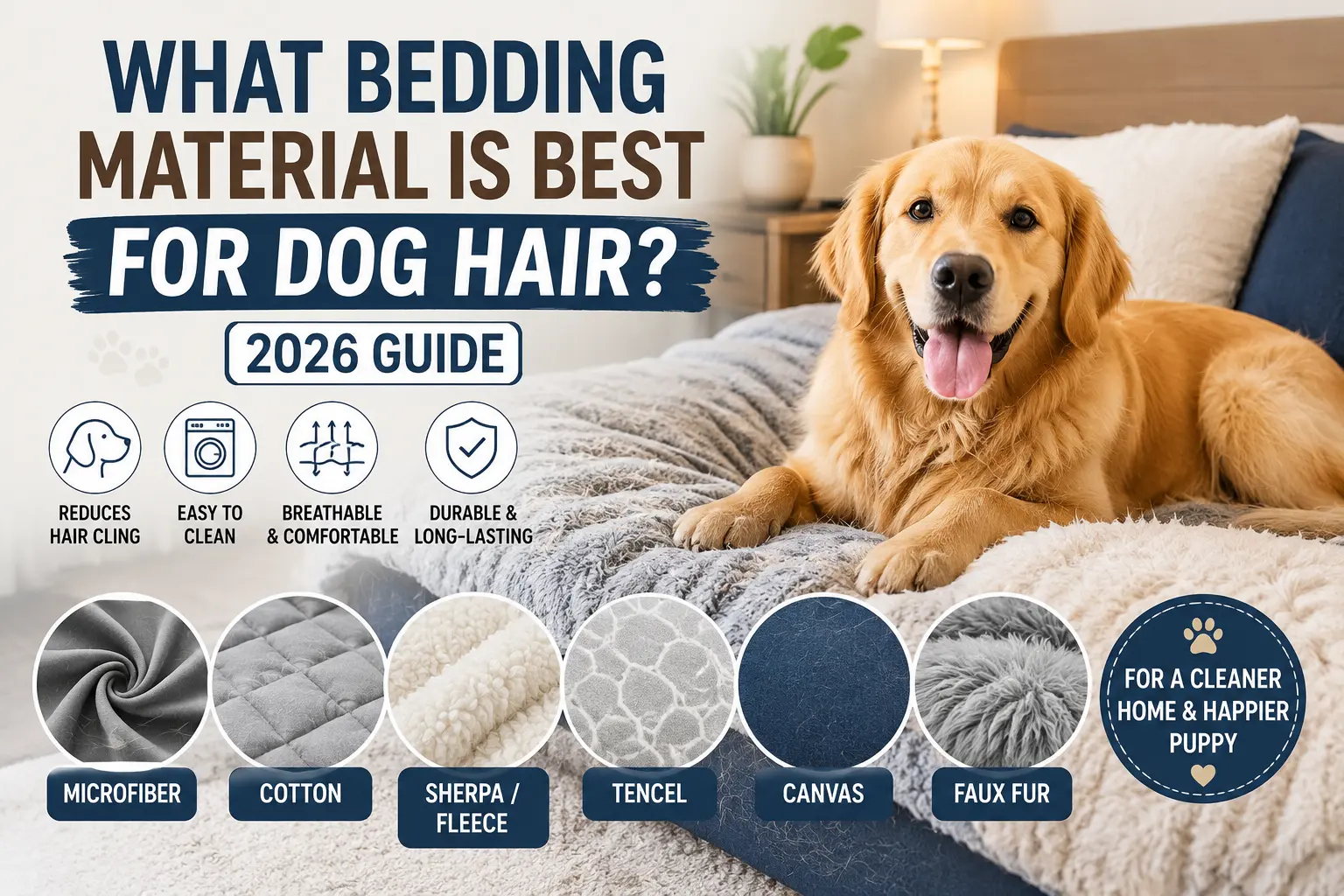
In this guide, we’ll break down exactly which bedding materials work best for dog hair, why they work, and how to choose the right option for your home.
Why Some Fabrics Attract More Dog Hair Than Others
Before jumping into recommendations, it helps to understand why certain materials are hair magnets in the first place. Two factors matter most:
- Weave tightness – Loosely woven fabrics have more gaps for hair strands to burrow into, making them harder to clean.
- Static and texture – Fabrics that generate static electricity (like fleece or wool) attract loose hair and hold onto it. Smooth, tightly woven fabrics let hair sit on the surface instead of embedding into the fibers.
With that in mind, here are the materials that consistently perform best for pet owners dealing with dog hair.
1. Microfiber
Microfiber is one of the top choices for dog owners, and for good reason. Its extremely tight weave means hair has nowhere to burrow, so it mostly sits on top of the fabric where a quick shake or vacuum can remove it. Microfiber is also:
- Durable and machine-washable
- Resistant to stains and moisture (great for muddy paws or accidents)
- Affordable compared to specialty pet-friendly fabrics
Best for: Dog beds, couch throws, and duvet covers in homes with heavy shedders.
2. Tightly Woven Cotton (High Thread Count)
Not all cotton is equal when it comes to pet hair. Low-thread-count cotton has a looser weave that traps hair, while high-thread-count cotton (think 300+ threads per square inch) is smooth and tightly knit, allowing hair to sit on the surface rather than sink in.
- Breathable and soft, ideal for everyday sheets
- Easy to wash and dries quickly
- Less prone to static than synthetic fabrics
Best for: Bedsheets and pillowcases, especially in warmer climates.
3. Satin and Silk-Like Fabrics
Satin (and satin-weave polyester or silk blends) has a naturally smooth, slippery surface. Hair simply can’t grip onto it the way it can with textured fabrics like fleece or wool.
- Hair slides off rather than embedding
- Adds a touch of luxury to your bedroom
- Low static means less hair-attracting cling
Best for: Comforters, duvet covers, and decorative pillow covers.
4. Ripstop Nylon or Polyester Blends
If your dog sleeps in a designated bed rather than yours, ripstop nylon and tightly woven polyester are excellent picks. These synthetic fabrics are used in a lot of outdoor and heavy-duty dog beds because they’re:
- Extremely tear- and puncture-resistant
- Naturally low-friction, so hair doesn’t cling
- Often water-resistant, which helps with drool and accidents
Best for: Dog beds, crate pads, and covers for dogs that shed heavily or scratch/dig at their bedding.
Materials to Avoid If You Have a Shedding Dog
Just as important as knowing what to choose is knowing what to avoid:
- Fleece – Soft and cozy, but its texture and static charge make it one of the worst offenders for trapping hair.
- Wool and wool blends – Similar to fleece, wool’s texture grabs onto hair fibers and is notoriously hard to fully clean.
- Chenille or looped-texture fabrics – The looped weave (common in some throws and blankets) acts like Velcro for pet hair.
- Velvet or velour – The soft nap holds hair strands tightly, requiring lint rollers or specialty brushes to remove them.
Quick Comparison Table
| Material | Hair Resistance | Ease of Cleaning | Durability |
|---|---|---|---|
| Microfiber | Excellent | Excellent | High |
| High thread-count cotton | Good | Excellent | Medium-High |
| Satin/silk blend | Excellent | Good | Medium |
| Ripstop nylon/polyester | Excellent | Excellent | Very High |
| Fleece | Poor | Poor | Medium |
| Wool | Poor | Poor | High |
Extra Tips to Minimize Dog Hair on Bedding
Even with the best fabric, a few habits go a long way:
- Wash bedding weekly using a gentle cycle, and add a half-cup of white vinegar to the rinse to help loosen embedded hair.
- Use a rubber brush or dryer balls in the dryer—rubber grips hair and pulls it away from fabric during tumbling.
- Brush your dog regularly, especially during shedding season, to reduce the amount of loose hair in the first place.
- Choose darker or patterned bedding if your dog has light-colored fur (or vice versa)—it won’t eliminate hair, but it will hide what’s left between washes.
Final Verdict: What’s the Best Bedding Material for Dog Hair?
If you want the single best all-around option, microfiber is hard to beat—it’s affordable, durable, and genuinely resists trapping hair better than most alternatives. For your own bed, a high thread-count cotton or satin blend strikes the right balance of comfort and hair resistance. And if it’s your dog’s bed you’re outfitting, ripstop nylon or polyester will hold up best to daily wear, shedding, and the occasional accident.
Whatever you choose, avoiding textured, high-friction fabrics like fleece and wool will save you countless hours of lint-rolling down the road.
Frequently Asked Questions
Does thread count really matter for pet hair? Yes. Higher thread counts mean tighter weaves, which give hair less opportunity to embed into the fabric.
Is microfiber safe for dogs to sleep on directly? Generally yes—microfiber is soft, durable, and easy to clean, making it a popular choice for dog beds specifically designed for shedding breeds.
How often should I wash pet-hair-prone bedding? Once a week is a good baseline, though homes with multiple pets or heavy shedders may benefit from washing every 4–5 days.